









Dr Rishika Sinha is a Consultant Dermatologist at Dr Sam Bunting + Associates, trained at the University of Cambridge and is a Member of the British Association of Dermatologists. She sees patients with eczema and other inflammatory skin conditions every week in clinic and has a particular interest in building long-term, practical management plans that actually fit around patients' lives. She is on the GMC specialist register.
You've probably had eczema, or suspected you have, for a while. Patches of dry, itchy skin that flare in the crease of your elbows or behind your knees, calm down for a stretch, then come back the moment the weather changes or you're run down. Maybe you've had it since childhood and it's simply part of how your skin behaves. Maybe it's newer, and you're not entirely sure why it's started now.
Eczema is one of the most common conditions I see in clinic, and also one of the most persistently misunderstood. People are often told to "just moisturise" without much explanation of why that matters, or handed a steroid cream with no clarity on how much to use or for how long. This is the clear picture I give my patients: what eczema actually is, why it flares, and the treatment approach that genuinely controls it long-term rather than just holding it off week to week.
What Is Eczema, and Why Does It Happen?
Eczema, or atopic dermatitis, comes down to two things happening together: a skin barrier that doesn't hold onto moisture or keep irritants out as well as it should, and an immune system that overreacts to that vulnerability with inflammation. The skin's outer layer is normally held together by lipids and proteins that lock in water and lock out allergens and irritants. In eczema, that barrier is looser, partly for genetic reasons, which lets moisture escape and lets irritants and allergens in more easily than they should.
The immune system responds to this with an inflammatory reaction, which is what produces the redness, itching, and thickened skin that define a flare. This is also why eczema runs so closely alongside asthma and hay fever, a pattern known as the atopic triad. All three conditions share the same underlying tendency toward an overactive immune response, just expressed in different tissues. A family history of any of the three is one of the most useful pieces of information when I'm assessing a patient's skin.
What Does Eczema Look Like, and Where Does It Appear?
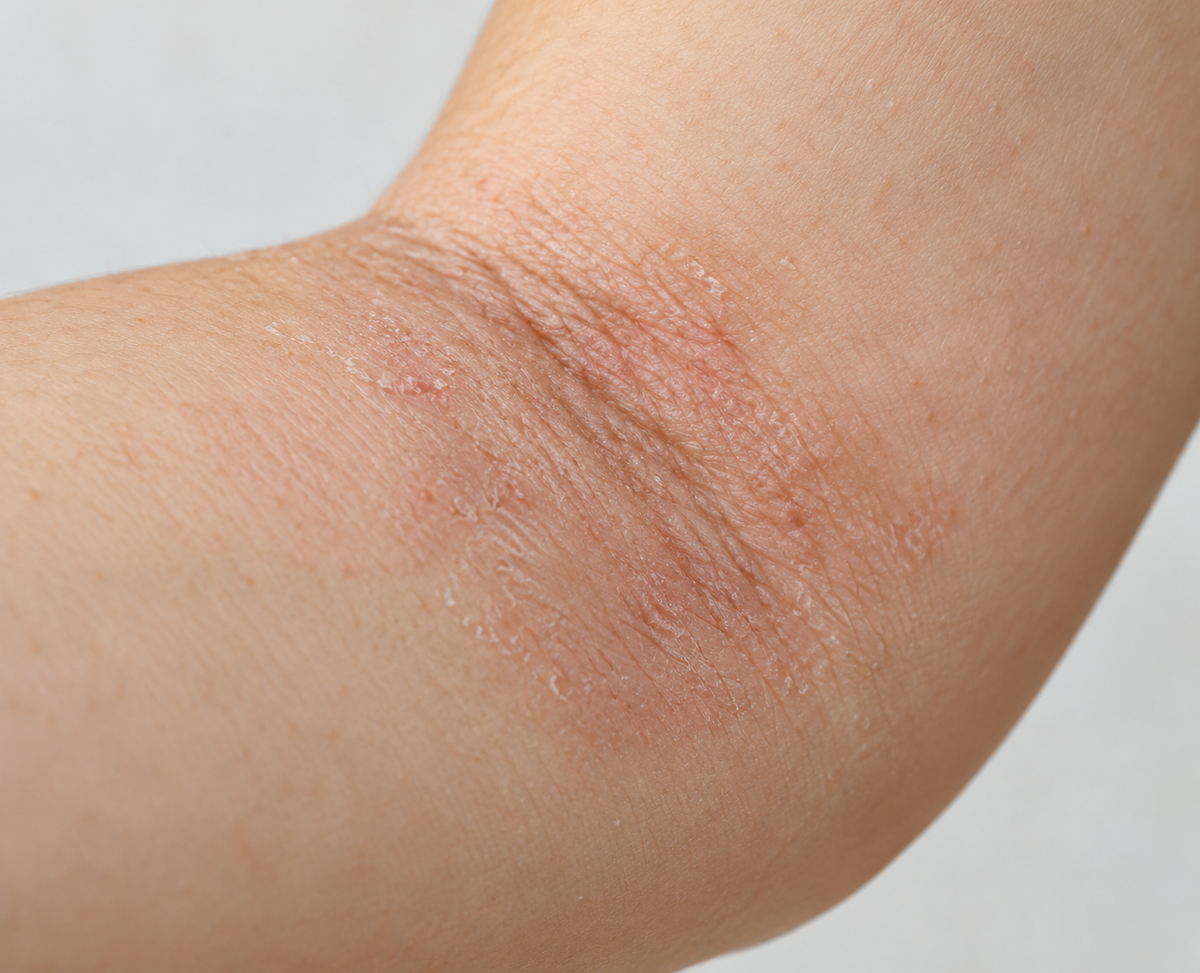
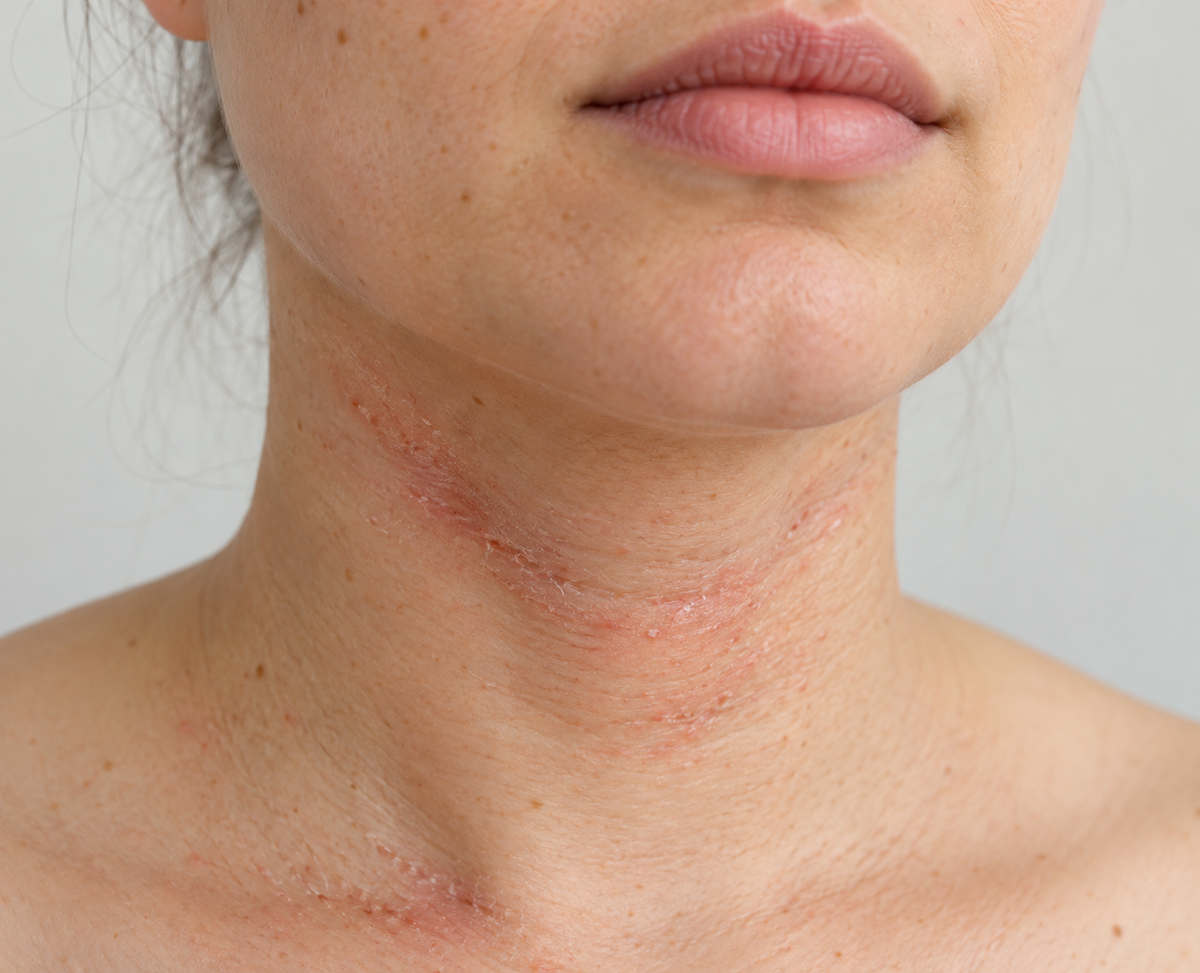
The pattern varies by age, but in older children and adults it typically shows up in the flexures: the creases of the elbows and knees, the neck, and sometimes the eyelids and hands. The patches tend to have blurred, poorly defined edges, and the skin looks dry, red, and sometimes thickened from repeated scratching, a process called lichenification. In babies, eczema more often appears on the face and scalp and the outer surfaces of the limbs before shifting to the flexural pattern as they get older.
Diagnostically, I'm looking for an itchy skin condition alongside at least a few of the following: visible or previous involvement of the skin creases, a personal or family history of asthma or hay fever, generally dry skin, and, in children, onset before the age of two. None of these on their own confirms eczema, but the combination is what makes the diagnosis, alongside simply looking at the skin. If the presentation is atypical, or I suspect a specific allergy is driving things, patch testing can help identify a contact trigger that's worth eliminating.
What Triggers a Flare?
Triggers are individual, but the common ones I ask about are soaps, detergents, and foaming cleansers that strip the skin's natural oils; scratchy fabrics like wool or certain synthetics; extremes of temperature, particularly overheating and sweating; environmental allergens such as house dust mite and pet dander; and stress, which has a well-documented link to flare frequency and severity. In young children, food allergy is occasionally relevant, though it's a much rarer driver than people often assume, and dietary restriction should really only be pursued with proper guidance rather than as a first instinct.
How Do We Treat Eczema in Clinic?
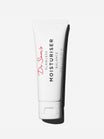
Every treatment plan starts with emollients, and this is the step patients most often underestimate. Moisturising needs to be frequent and genuinely liberal, applied several times a day rather than once, with the aim of using considerably more emollient than any other treatment in the routine. Swapping foaming soaps and shower gels for a gentle, non-stripping cleanser or emollient wash makes a meaningful difference here too. Flawless Moisturiser Intense is one I recommend often for eczema-prone skin, since it's formulated to repair and support the barrier rather than simply sitting on the surface, which is exactly the mechanism that needs reinforcing in eczema.
When a flare needs more than emollients, topical steroids are the next step, chosen in a strength matched to the site being treated. Weaker steroids are used on the face and flexures, where the skin is thinner and more absorptive, with stronger preparations reserved for thicker-skinned areas like the palms or soles when needed. Used correctly, at the right strength for the right duration, topical steroids are safe and effective. The problems I see almost always come from either under-treating out of fear of the medication, which lets a flare drag on longer than it needs to, or using them without a clear endpoint.
For areas where long-term steroid use isn't ideal, particularly the face and eyelids, topical calcineurin inhibitors such as tacrolimus and pimecrolimus are a steroid-sparing alternative. They work by calming the immune overactivity directly rather than through the same mechanism as steroids, and they don't cause the skin thinning that can come with prolonged steroid use on delicate areas.
If eczema is extensive and isn't settling with topical treatment alone, phototherapy is often the next option, using controlled ultraviolet light two to three times a week over several weeks. For moderate to severe eczema that hasn't responded adequately to the steps above, tablet treatments such as ciclosporin or methotrexate, or injectable biologics like dupilumab and tralokinumab, become appropriate. These sit outside what's managed through topical prescribing in a dermatology consultation alone, so at that point I'd refer you on to the right pathway, with a clear explanation of why and what to expect.
When Does Eczema Need More Than Skincare and Topicals?
A few situations warrant a prompt reassessment rather than continuing with your usual routine. Weeping, crusting, or a sudden worsening of previously stable eczema can indicate a bacterial infection, which often needs a course of oral antibiotics alongside your regular treatment. Grouped, blistered spots with a punched-out appearance can indicate a herpes simplex infection affecting eczema-prone skin, which needs urgent same-day assessment and antiviral treatment. And if eczema is disrupting your sleep, affecting your work or school life, or simply isn't responding despite using treatment correctly, that's a sign the current plan needs revisiting rather than persisting with, regardless of how mild the eczema might look on the surface.
Building Your Eczema Treatment Plan
| Step | What it involves | When It's used |
| 1. Emollients | Liberal, frequent moisturising, plus soap substitutes to protect the barrier | The foundation of treatment for everyone, used continuously, not just during flares |
| 2. Topical steroids or TCIs | Anti-inflammatory creams matched in strength to the affected site | Active flares, or sensitive areas like the face and eyelids where TCIs are often preferred |
| 3. Phototherapy | Controlled UV light exposure, usually 2-3 sessions a week | Widespread eczema not settling with topical treatment alone |
| 4. Systemic or biologic treatment | Tablets (such as ciclosporin or methotrexate) or injectable biologics (such as dupilumab) | Moderate to severe eczema that hasn't responded to the steps above |
Signs Your Eczema Needs More Than Over-the-Counter Creams
- Your skin is weeping, crusting, or suddenly getting worse rather than settling.
- You're using a topical steroid regularly but the eczema keeps coming straight back once you stop.
- The itching is disrupting your sleep on a regular basis.
- Eczema covers a large area of your body, or keeps spreading to new sites.
- You've never had a clear explanation of what strength of treatment to use, where, and for how long.
Frequently Asked Questions
Is eczema the same as an allergy?
Not exactly, though the two are closely linked. Eczema is fundamentally a skin barrier problem combined with an overactive immune response, and it sits within what's called the atopic triad alongside asthma and hay fever, which share a similar immune tendency. Allergies can trigger or worsen a flare, particularly environmental ones like house dust mite or pet dander, and occasionally food in young children, but eczema itself isn't simply an allergic reaction. This is why patch testing or allergy testing is only useful in specific cases, rather than something every patient with eczema automatically needs.
Can eczema be cured?
Not in the sense of a permanent, one-time fix, but it can be very well controlled. Eczema tends to follow a relapsing and remitting course, meaning it improves for stretches of time and can be reactivated by triggers, hormonal shifts, or simply time. Many children with eczema find it improves significantly or resolves by their teenage years, while others carry a tendency toward eczema-prone skin into adulthood. Either way, the right routine and treatment plan can keep it genuinely settled for long periods, even if the underlying tendency doesn't disappear entirely.
Is it safe to use topical steroids long-term?
Used correctly, yes, and this is one of the most persistent sources of unnecessary anxiety I see in clinic. The strength should be matched to the site and severity, reviewed regularly, and stepped down once a flare is controlled rather than continued indefinitely at the same strength. The real risk comes from either avoiding steroids altogether, which allows eczema to become more established and harder to treat, or using a stronger steroid than necessary on delicate skin for longer than needed. A proper treatment plan, reviewed periodically, avoids both of these problems.
Can adults develop eczema for the first time, or is it only a childhood condition?
Adults can absolutely develop eczema for the first time, even with no childhood history of it. It's less common than childhood-onset eczema, but it happens, sometimes triggered by a change in environment, a new job involving frequent hand washing or chemical exposure, hormonal shifts, or significant stress. Adult-onset eczema is assessed and treated the same way as eczema at any other age, though it's always worth ruling out other causes of dry, itchy skin first, since a few other skin conditions can present similarly.
How do I know if it's eczema or psoriasis?
The two are commonly confused because both cause red, scaly, itchy patches, but they come from different underlying processes and need different treatment approaches. Psoriasis tends to produce thicker, more sharply defined plaques with a silvery scale, while eczema patches are usually less well defined and can weep or crust. If you're not sure which you're dealing with, our full guide to telling the two apart covers the visual and clinical differences in more detail.
When to See a Dermatologist
If your eczema isn't responding to a properly used skincare and treatment routine, or you've never actually been given a clear plan for what to use, where, and for how long, that's exactly what a consultation is for. At Dr Sam Bunting + Associates, we build a plan around your skin specifically, rather than a generic one-size-fits-all routine, and we're honest with you about when a treatment needs stepping up rather than persisting with something that isn't working. To book an assessment with our team, contact us at info@drsambunting.com or visit our Book an Appointment page.