














Patch Testing
Your First Step to Bright, Clear Skin
At Dr Sam’s, we pride ourselves on developing intelligently formulated skincare that’s both effective and gentle on the skin barrier. Despite this, new formulas, active ingredients, or combinations of actives can sometimes provoke sensitivities, even if a product is gentle or well-tolerated by others.
Patch testing helps you understand how your skin responds to a new product, reduces the risk of irritation, and gives you confidence as you build a routine that’s right for you.
Why Patch Test?
Patch testing is a quick way to check if your skin might react - with redness, itching, burning or bumps - before you use a product all over your face or body.
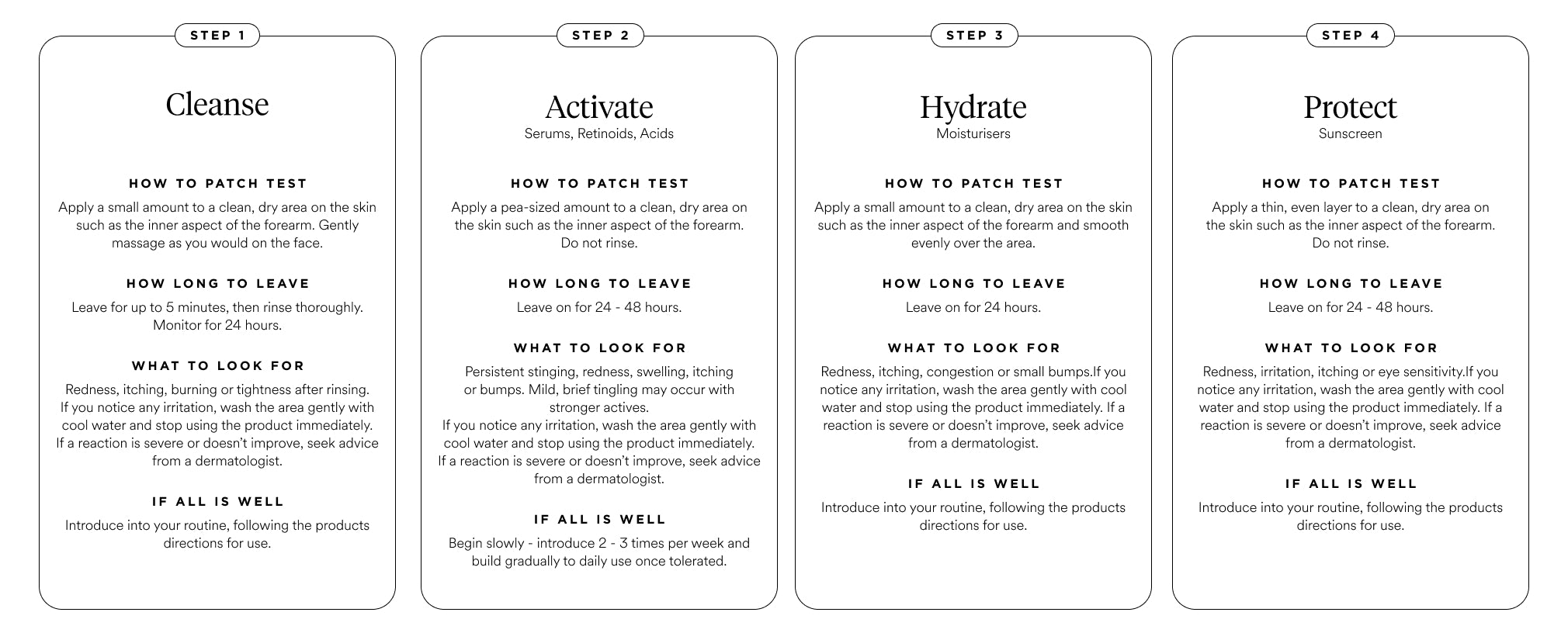
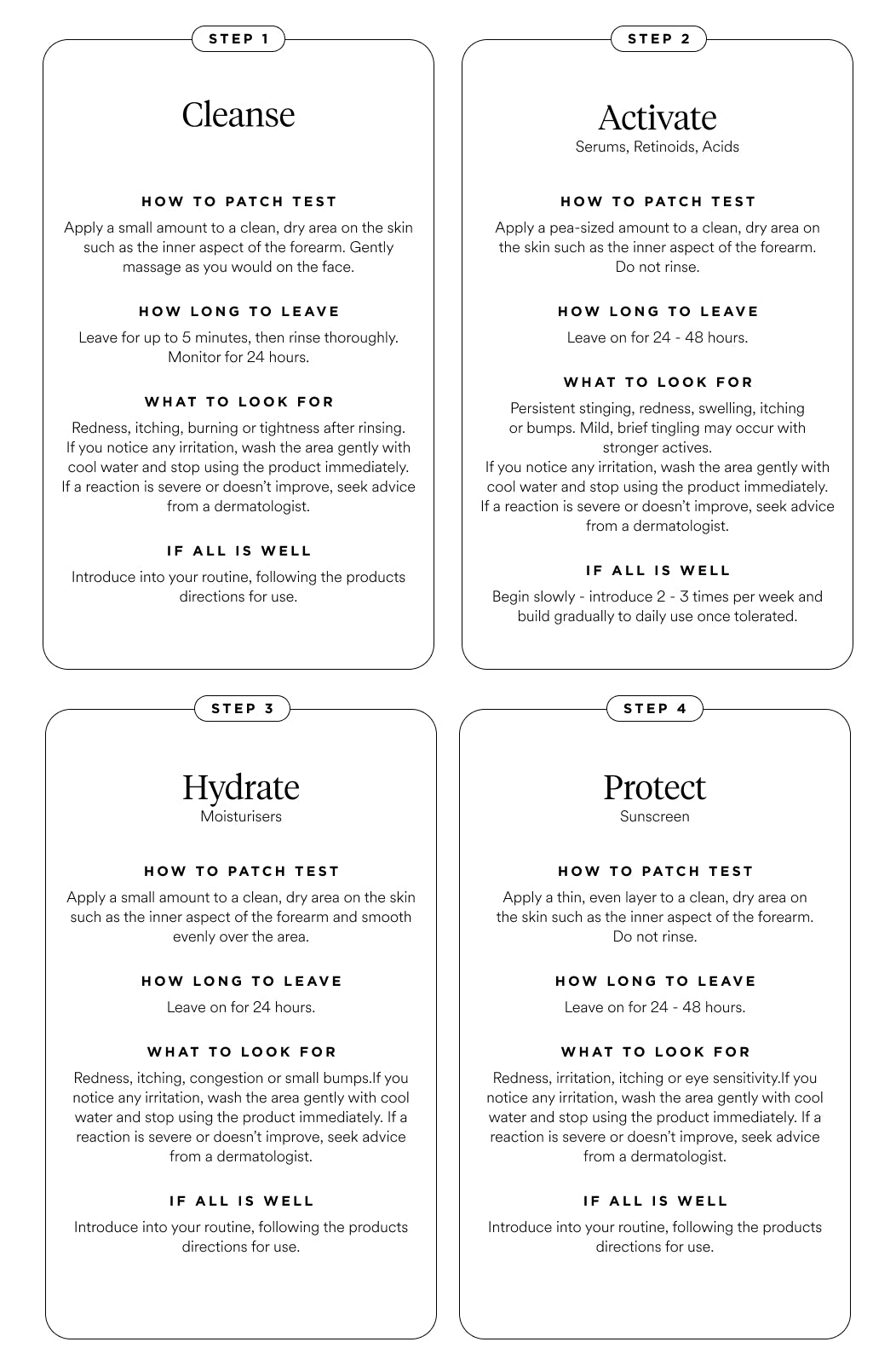
How to Patch Test
A Sensible Word of Caution
A small test area can give you useful insight into how your skin may respond, however it cannot fully predict how a product will behave when applied more broadly, particularly on the face where skin can be more reactive. For that reason, always follow the usage instructions and precautions provided with each product.
If you have a history of skin allergies, eczema, rosacea, or persistent reactivity, seek guidance from your GP or dermatologist before introducing new products.
If you experience significant irritation during your patch test - such as pronounced redness, swelling, blistering or discomfort - discontinue use immediately.
And if you need support or reassurance, our Customer Care team are here to help at hello@drsambunting.com
Patch Testing FAQs
When do I need to patch test?
You should patch test:
- Every time you introduce a new product into your routine
- If your skin is feeling more sensitive than usual - for example during pregnancy, after a procedure, or if your barrier is compromised
- When starting a stronger active such as vitamin A
How often should I patch test?
If you’re building a routine, introduce products one at a time, ideally spacing them by a few days. This way, if irritation occurs, you can confidently identify the cause.
If you’ve taken a long break from a potent active (for example, retinoids), it can be wise to patch test again before restarting - especially if your skin has changed.
What if I don’t react during the patch test but notice irritation later?
Occasionally, reactions only become apparent with repeated use. If this happens:
- Stop the product immediately
- Return to a simple, barrier-supportive routine
- Reintroduce cautiously (if appropriate)
Is tingling during a patch test normal?
With certain actives - such as exfoliating acids - mild, short-lived tingling can occur. However, persistent burning, swelling, itching or visible redness is not expected and signals that the product may not be suitable for you.
When in doubt, err on the side of caution.
Do I need to patch test if I don’t have sensitive skin?
Yes. Sensitivity isn’t always predictable. Even resilient skin can react to new combinations of ingredients.
