












Summer in London can be glorious. But for many of my patients, this is also the time of year when melasma makes its unwelcome return. It’s a condition that, once triggered, often becomes a chronic presence, persisting for years if not properly managed. Let’s explore what melasma really is, how to tell it apart from other types of pigmentation, and most importantly, how we treat it.
Melasma vs Other Pigmentation: Getting the Diagnosis Right
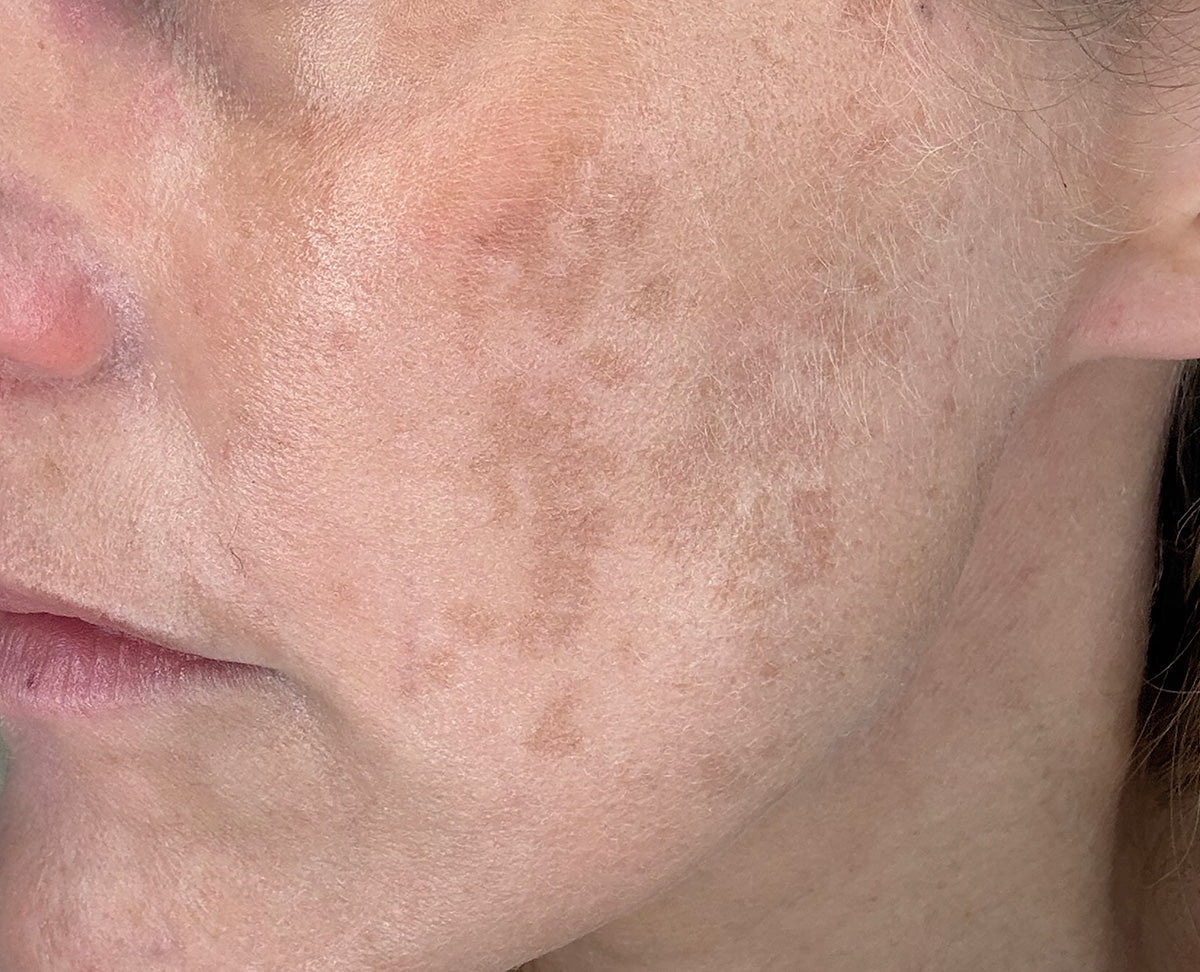
Melasma often shows up as symmetrical, blotchy brown or grey patches across the forehead, cheeks, and upper lip. That symmetry is a key clue. But not all pigmentation is melasma. Sunspots (solar lentigines) or post-inflammatory pigmentation (from acne or rashes) have different causes and respond to different treatments. That’s why a clear diagnosis from a dermatologist matters. Sometimes we’ll even use a dermatoscope to get a better look at the pigment’s depth and pattern.
Why Melasma Happens: The Hormone and Sunlight Double Act
About 90% of those affected by melasma are women. Hormonal changes—from pregnancy, the contraceptive pill, HRT or even IVF—can trigger it. Combine that with UV and visible light exposure, and you’ve got the perfect storm. Skin of colour is more prone, as melanin-producing cells are already more active. And once that melasma switch is flipped, it doesn’t always switch off again.
Prevention: Your First Line of Defence
The non-negotiable? Daily, high-factor broad-spectrum sunscreen. Ideally, choose a tinted version (to block visible light) and top it up throughout the day. This isn’t just a beach-day thing—London daylight counts. Think of SPF as your daily melasma therapy.
Avoid heat, friction and harsh treatments. That includes physical scrubs , facial waxing , and overusing too many actives. A healthy skin barrier is essential to any treatment plan.

At-Home Treatments: What Works
Melasma treatment is a marathon, not a sprint. At home, focus on gentle but effective ingredients:
- Pigment suppressors like azelaic acid, niacinamide, and vitamin C
- Barrier boosters to support tolerance
- Retinoids, if your skin can tolerate them (avoid during pregnancy)
If you’re using actives, apply them strategically and consistently. Overdoing it can trigger inflammation and paradoxically worsen your pigmentation.
In-Clinic Treatments: Prescription and Personalised Plans
For stubborn cases or time-sensitive goals (think weddings or big events), we prescribe hydroquinone (typically at 4%) as a gold standard pigment suppressor, used in cycles in conjunction with a retinoid.
More recently, oral tranexamic acid has revolutionised melasma therapy. Originally used to treat menorrhagia (heavy periods), it also reduces vascular factors contributing to melasma. It’s been a transformative addition to our toolkit.
We rarely start with devices like lasers or peels. Melasma is an inflammatory condition, and aggressive treatments can backfire. If we do consider laser, it’s as a third-line option and always after an appropriate skincare regime has been implemented to stabilise melanocytes in the skin.
What Not to Do
- Don’t wax the upper lip if you're prone to pigmentation
- Don’t rely on LED masks—blue light can make things worse
- Don’t skip sunscreen. Ever.
- Don’t use hydroquinone long-term without medical supervision
Managing Expectations: Melasma is a Journey
Melasma is chronic. Even when it clears, it needs a maintenance strategy. We cycle through different pigment suppressors to both avoid side effects and deliver sustained results. Most importantly, we build routines that are compatible with real life—with all its sunshine and special occasions.
If you're struggling to get your pigmentation under control, seek expert advice. With the right diagnosis and treatment plan, bright, clear skin is possible.
Want personalised help? Book a consultation at our London clinic—we’d love to help you find a routine that works for you.