



CLINIC
Acne, Breakouts & Scarring
As a team, our expertise spans the gamut of 3000+ skin conditions. We specialise in the holistic treatment of acne and acne scarring at all stages of life.
What is Acne?
Acne is a common - but often misunderstood - skin condition. It’s not just a teenage issue, and it’s not something you should just “put up with.”
Acne happens when oil glands in the skin become overactive and pores get blocked. That leads to blackheads, whiteheads, red bumps, and sometimes deeper, more painful cysts. It tends to appear on the face, chest and back - anywhere oil glands are particularly active.
While almost everyone experiences acne at some point, around 1 in 5 people go on to develop more severe forms. And it’s not just physical. Acne can take a real toll on your mental health - impacting self-esteem, mood, even how you show up in the world.
The goal of treatment? To prevent long-term complications - like scarring - and help you feel confident again.
What Causes Acne?
There’s no single cause—but there is a pattern. Here’s what’s going on under the surface:
- Hormones – During puberty (and at other hormonal shifts), the body produces more androgens - like testosterone - which stimulate oil production.
- Blocked pores – Skin cells don’t shed as they should, leading to clogged follicles.
- Bacteria – A natural skin bacterium called C. acnes thrives in oily environments and triggers inflammation when trapped in a blocked pore.
- Genetics – Acne often runs in families. Studies show if your parents had acne, you’re more likely to develop it too.
Together, these factors create the perfect storm for breakouts to appear - and persist.
What Does Acne Look Like?
Acne comes in many forms:
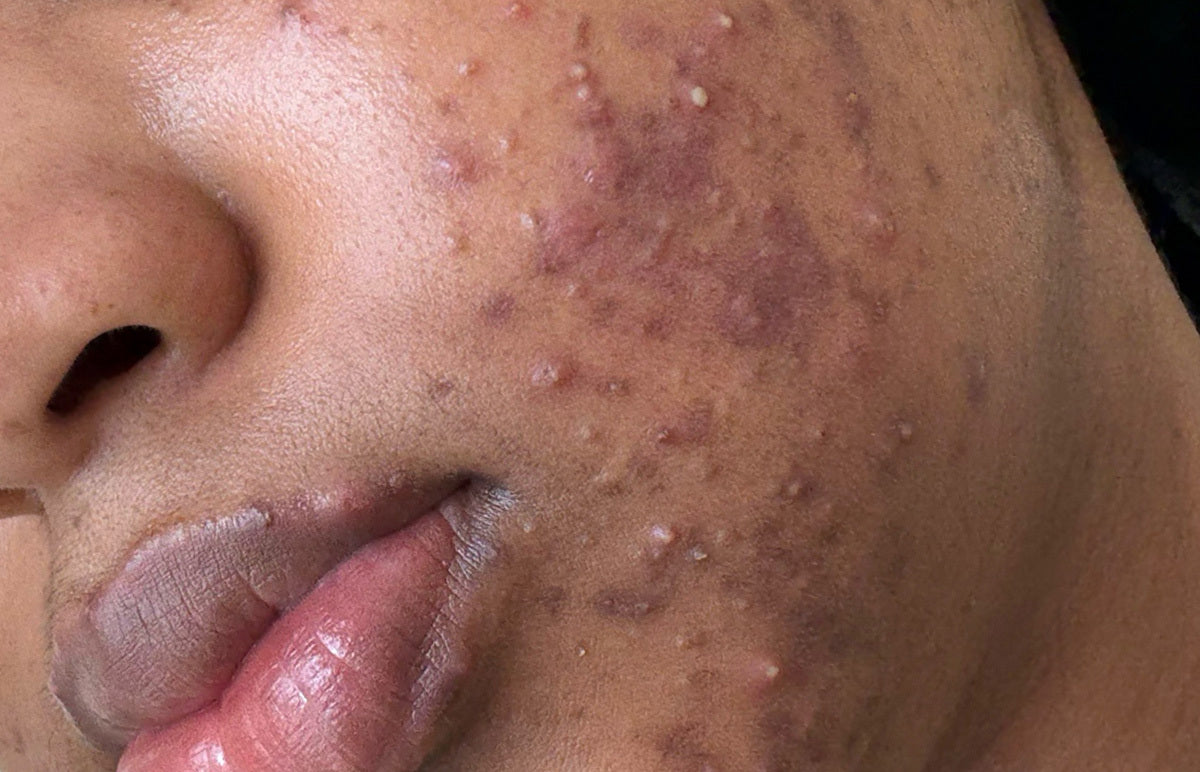
- Blackheads and whiteheads (comedones) – These are non-inflamed, blocked pores. Whiteheads are closed off under the skin; blackheads are open to the air and turn dark due to oxidation.
- Papules and pustules – These are inflamed spots. Papules are red, raised bumps; pustules contain pus.
- Nodules and cysts – Larger, deeper and more painful, these lesions are more likely to scar.
Over time, you might also notice pigmentation (red or dark marks), textural changes like pitted scars, or raised areas like keloids - especially in darker skin tones.
How We Treat Acne
No two acne journeys are the same. That’s why we take a personalised, step-by-step approach - starting with the basics and building up if needed.
Topical Treatments
- Retinoids – These vitamin A derivatives are the cornerstone of acne treatment. They help unclog pores, improve cell turnover and prevent new breakouts. Expect some mild irritation at first - it’s temporary and manageable with the right support. Tretinoin and adapalene are the go-tos.
- Benzoyl Peroxide – A brilliant option for reducing inflammation and targeting bacteria - without the risk of resistance. It works on both red spots and blackheads.
- Topical Antibiotics – Clindamycin can be helpful in short bursts, but it’s always combined with benzoyl peroxide or a retinoid to prevent resistance.
- Azelaic Acid – A gentle all-rounder that targets both acne and pigmentation. Particularly helpful for sensitive skin or in pregnancy.
Oral Treatments
- Antibiotics – For moderate to severe acne, a course of oral antibiotics (like doxycycline or lymecycline) can reduce inflammation quickly. We always combine with a topical regime to maintain results and keep things sustainable.
- Hormonal Therapy – In women, the combined contraceptive pill can help regulate sebum production and reduce acne. Spironolactone - an off-label but effective treatment - can also be a game-changer in adult female acne and PCOS. It’s a specialist-prescribed option, and one we use regularly at Dr Sam Bunting and Associates.
- Isotretinoin – Known as Roaccutane, this powerful retinoid is reserved for more stubborn or scarring acne. It’s incredibly effective, but requires close monitoring by a dermatologist. There’s been discussion around its effect on mood - we take that seriously and always have a full conversation around risks and benefits before starting.
In-Clinic Options
- Light & Laser Treatments – For patients who can’t (or prefer not to) take oral medications - think pregnancy, fertility treatment or medical contraindications - we offer evidence-based light and laser therapies like BroadBand Light (BBL). These can reduce inflammation, speed up clearance and help with post-acne marks too.
- Steroid Injections – Got a painful nodule ahead of a big event? A quick in-clinic steroid injection can flatten it, usually within 48 hours. It’s not a long-term fix, but it can be helpful in the right moment.
At Dr Sam Bunting and Associates, we bring together science, experience and empathy to help you take control of your skin - for the long term.
Because confidence starts with clarity - about your condition, your treatment options, and what's possible.
Let's get started.
What If You're Left With Scarring?
Once your acne is under control, some marks and textural changes can take longer to settle - or need their own treatment.
We treat this separately, because it works best once your skin is stable.
