






Not all acne is equal.
For plenty of people, a sensible routine used consistently gets breakouts under control and keeps them there. Other people find their acne doesn't play along. Individual blemishes lie deeper in the skin, and recur over and over, leaving marks that hang around long after the spot has gone. Working out which of these scenarios you're dealing with is the key.
It all comes down to inflammation. Every active breakout is an inflammatory event, and the longer it drags on, the higher the risk of the two things that are hardest to undo: post-inflammatory hyperpigmentation and true scarring. Treating your acne early and at the right level is what protects your skin over time.
The question this article helps you answer is a simple one. Have you given your skincare strategy enough time? Or is your acne on a fast track to medical treatment?
First: have you actually given your routine a fair chance?
Before you write skincare off, check that it's had the conditions to work. Acne treatment rewards consistency and punishes chopping and changing.
Most topical treatments need daily use for roughly eight to twelve weeks before you can make a call. You'll often see something happening sooner, but the real verdict takes a couple of months, or 2 skin cycles of reliable, consistent use. Drop a product at week three, or swap it out every few weeks, and you'll never know what was working.
The routine that gives treating your acne the best chance is usually a simple one. Gentle cleansing morning and night. Evidence-based actives, brought in slowly. A supportive, non-comedogenic moisturiser. Broad spectrum sunscreen every day.
The actives worth knowing are the ones with the track record. Benzoyl peroxide destroys acne-causing bacteria and helps unblock pores. Retinoids regulate how skin cells turn over and are the backbone of long-term control, as they target the formation of comedones (blocked pores). Azelaic acid is a well-tolerated all-rounder that calms inflammation and works on the marks left behind. Salicylic acid gets inside the oily pore and keeps it clear.
Where most people go wrong is doing too much. Piling on too many strong actives, over-exfoliating, scrubbing at the skin: all of it damages the barrier, and a damaged barrier stings and flakes and looks worse than it did before. That's usually when people quit.
So before you decide your routine has failed, be honest with yourself:
- Have you used it most days, the way it's meant to be used?
- Have you given it long enough? Think twelve weeks, not twelve days.
- Are you stopping because of irritation you could have avoided?
- Are you switching products before any of them gets a chance to deliver?
- Are you treating the whole area, or just dabbing at spots as they appear?
If you can tick those off and your skin still hasn't budged, that tells you something. It's often the point to get a professional involved.
Seven signs it may be time to see a dermatologist
Some acne clears nicely with a good routine. Some won't, and waiting it out rarely helps. Here's what tends to justify a professional opinion.
- Your acne is starting to scar. This is the big one - think of it as a skin emergency. True scars are textural: ice-pick, rolling and boxcar, all from collagen lost beneath the surface. They aren't the flat red or brown marks acne leaves, which fade in their own time. If you can see indentations forming, act quickly. Scarring is far easier to prevent than to fix.
- You get deep, painful nodules or cysts. Acne that causes deep, tender lumps (rather than surface spots) scars more readily and usually needs prescription treatment to settle. Squeezing it or trying to wait it out makes things worse.
- Your acne hasn't really shifted despite consistent treatment. If you've put in several months doing all the right things and you're stuck, it might be time to take action rather than grinding on with the same thing.
- It comes straight back the moment you stop. Acne is usually something you manage rather than cure, and most people need ongoing maintenance. If it returns every time you pause, that's a good reason for a medical review and a longer-term plan.
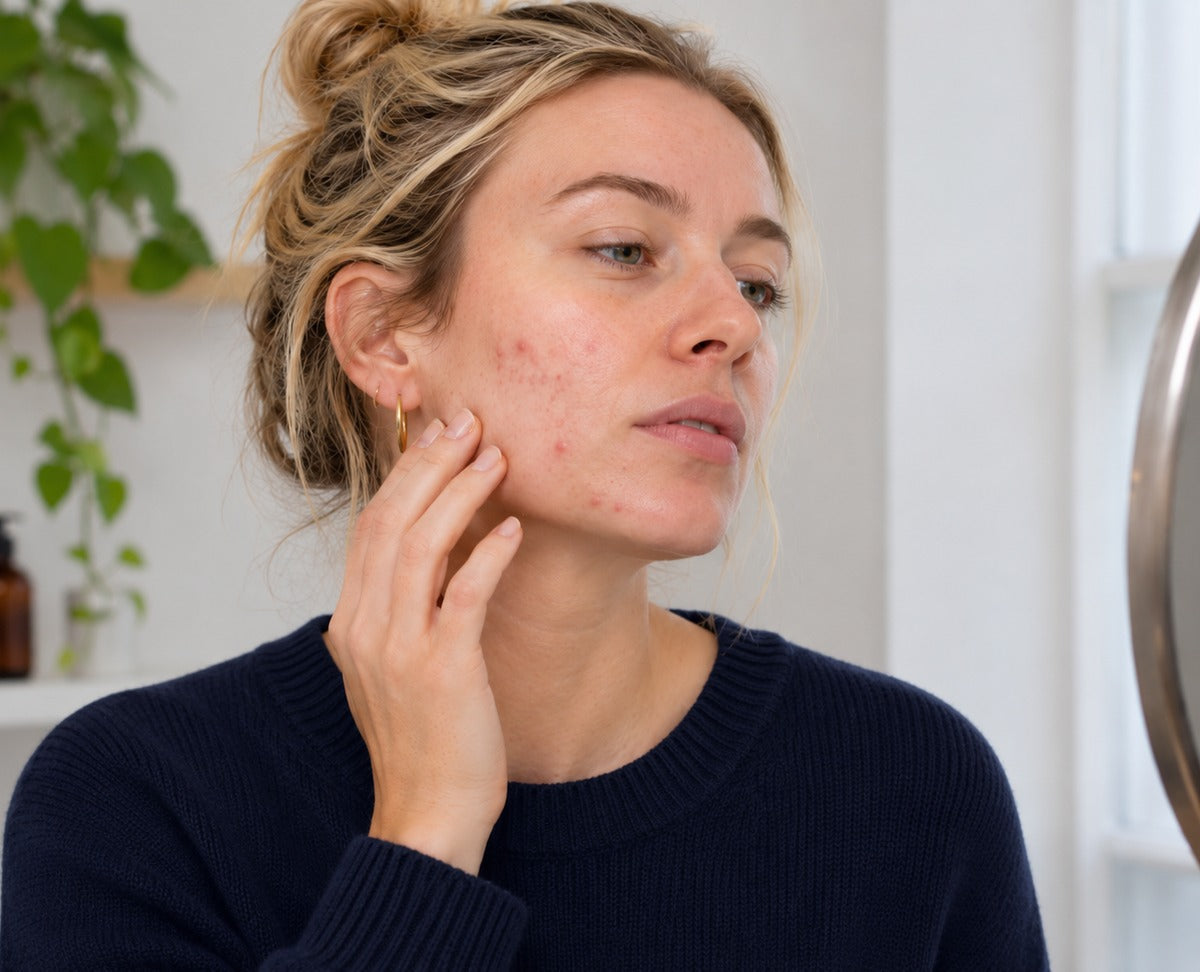
- It looks hormonal. Breakouts along the jawline and chin are a common feature of acne with a prominent hormonal component. This can be associated with deep, tender lesions that flare on a monthly cycle. It’s also often the case with adult acne that doesn’t improve year after year. Skincare still helps, but it may not reach what's going on underneath. More on this below.
- It's affecting how you live. Acne's reach extends past the skin. If it's knocking your confidence or your mood, that on its own is reason enough to seek help. You don't need to wait until it's "bad enough".
- Every breakout leaves a mark. If each spot leaves pigmentation behind, especially in deeper skin tones where it lingers longest, then stopping new spots forming becomes the whole game. The best way to prevent marks is to prevent the inflammation that causes them.
What can a dermatologist offer that skincare can't?
The short version: see a dermatologist when acne is scarring, deep and painful, clearly hormonal, affecting your quality of life, or simply not responding to a routine you've engaged with properly. A dermatologist can work out the type and severity of your acne and reach for treatments you can't buy off the shelf.
Prescription-grade skincare and medical treatment are rungs on the same ladder. Higher up, a dermatologist might consider:
- Prescription-strength topical retinoids
- Fixed combinations, for example a retinoid with benzoyl peroxide
- Prescription azelaic acid where appropriate
- Topical or oral antibiotics, used carefully and briefly to avoid resistance
- Hormonal treatment where it's medically appropriate, such as spironolactone or the combined oral contraceptive pill
- Isotretinoin, for the right person
Plenty of people never need a prescription, and a good clinician won't reach for one by default. Acne that usually does call for prescription treatment is moderate to severe, deep and nodular or cystic, scarring or heading that way, or acne that hasn't answered to good over-the-counter treatment. What's right for you depends on your acne, your history, whether pregnancy is a possibility, what you've already tried and your own risk factors. That's a conversation that’s bets to have face to face.
When is isotretinoin considered?
Isotretinoin draws a lot of searches and a lot of myth, so it earns its own section.
It's generally kept for severe acne, acne that's scarring or clearly threatening to, or acne that hasn't responded well enough to other appropriate treatment. It's powerful and it works, and it needs proper specialist assessment.
One myth is worth putting to bed. You don't have to wait until your skin is a disaster before anyone will discuss it with you. If your acne is scarring, or it keeps rebounding when you pause treatment, discussing isotretinoin with a dermatologist is a perfectly reasonable thing to do.
The conversation is a careful one. Isotretinoin comes with specialist supervision, ongoing monitoring, and a proper discussion of risks and precautions, including strict pregnancy prevention for anyone who could become pregnant. It's not a decision to rush or to take on your own, and it isn't for everyone. The point is that it gets assessed properly, at the right time, by someone qualified to weigh it up with you.
Acne marks are not always acne scars
Getting this distinction right changes what you should expect your products to do.
Most of what people call scarring is a mark, and marks fade. There are four things to tell apart:
- Post-inflammatory hyperpigmentation (PIH): flat brown, grey or dark marks after a breakout. Commoner and more stubborn in deeper skin tones.
- Post-inflammatory erythema (PIE): flat red, pink or purple marks from dilated blood vessels, more obvious in lighter skin.
- Atrophic scars: true indentations, from structural collagen loss, such as ice-pick, rolling and boxcar scars.
- Hypertrophic and keloid scars: raised, thickened scar tissue.
Skincare can do real work on PIH and PIE, and it can calm the inflammation that keeps producing fresh marks. A serum built for tone and pigment, like this one, lives here. What a cream can't do is reliably rebuild a depressed scar (although retinoids do help support collagen regeneration, as much as the tissue allows).
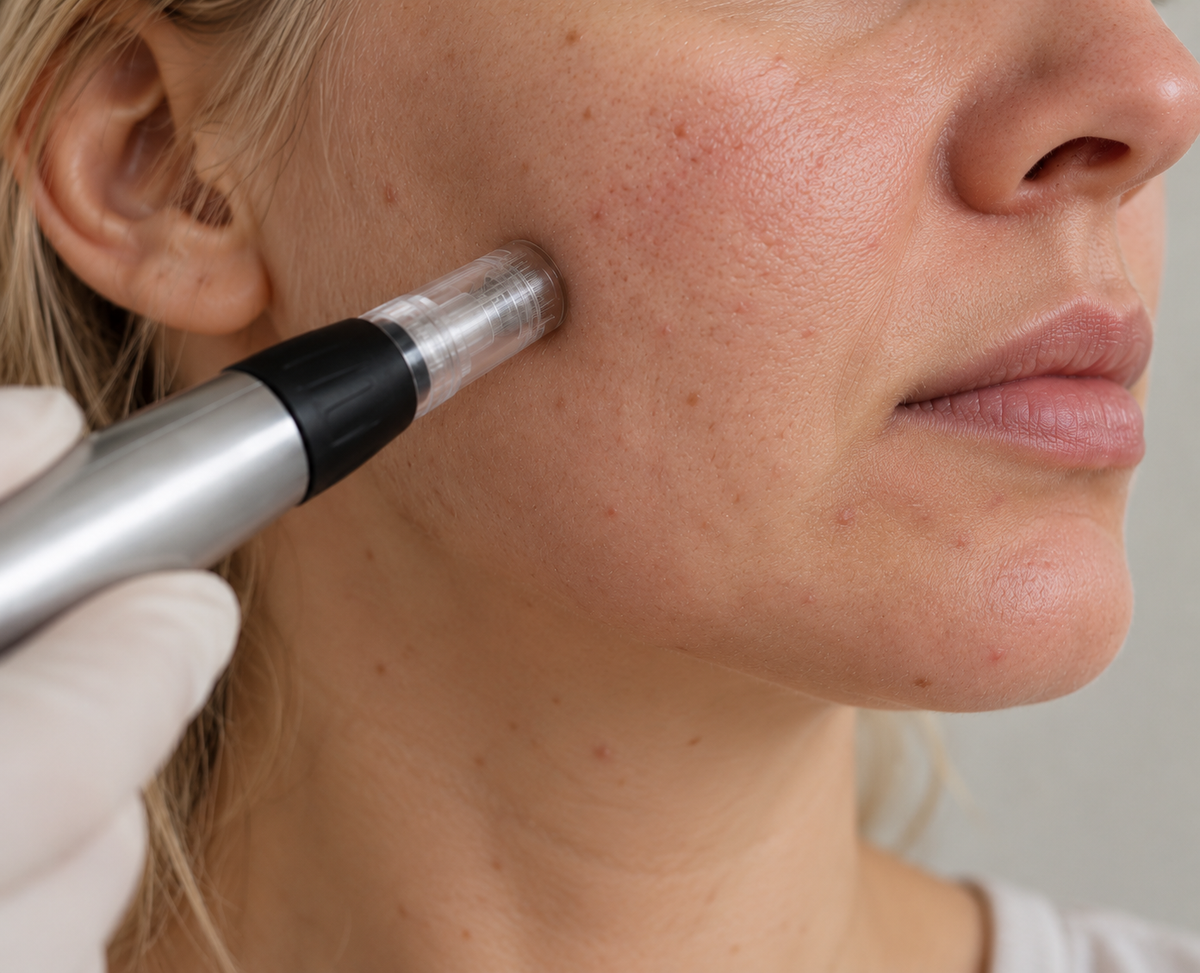
Atrophic scars are a structural change, and fixing them usually means in-clinic work rather than a cream: subcision, TCA CROSS, microneedling or radiofrequency microneedling, and fractional laser, often in combination. Results differ from person to person, which is exactly why it needs assessing in person.
How to protect your skin barrier while treating acne
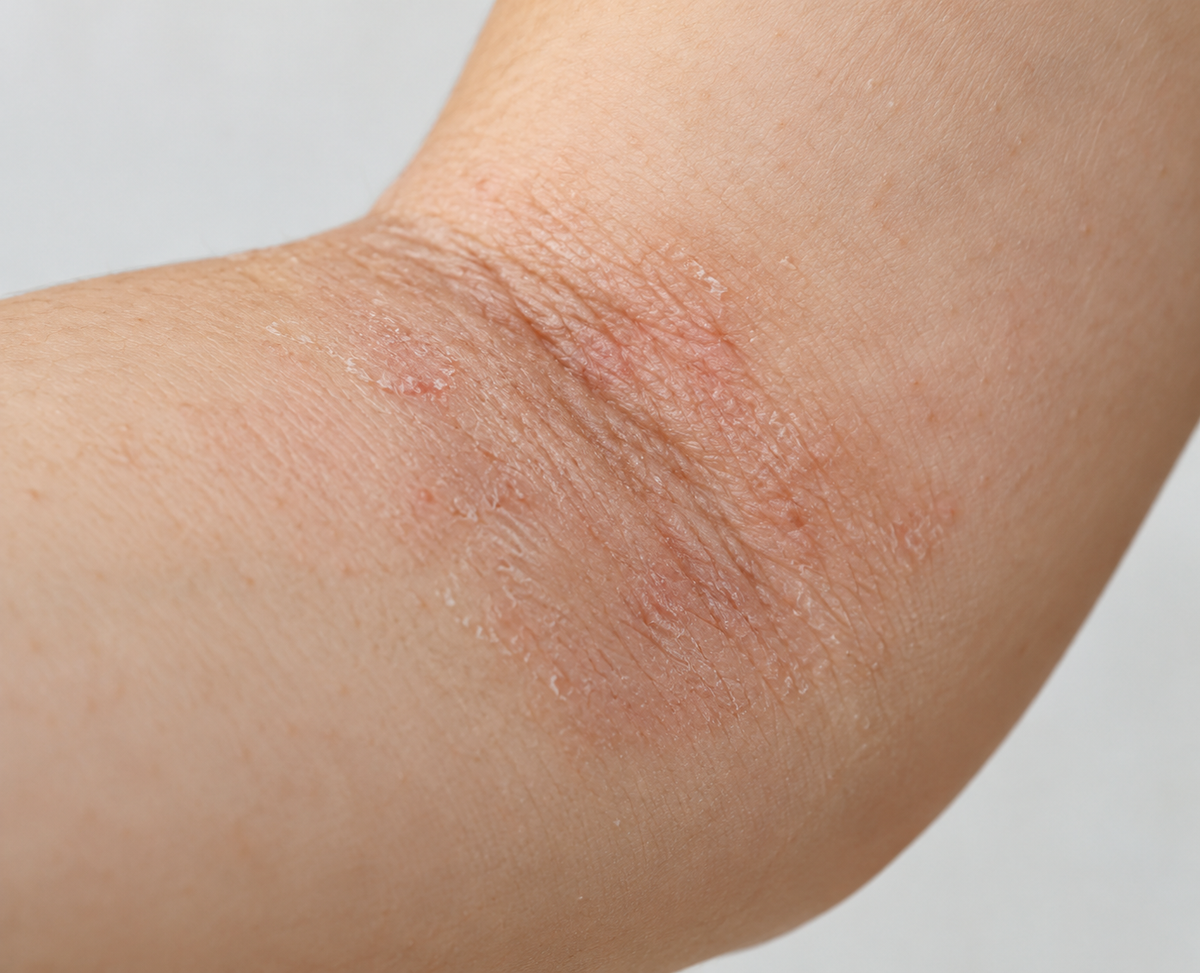
When it comes to failed acne treatment, one issue stands out: dryness, peeling and irritation all due to a damaged skin barrier.
A calm, intact barrier is what lets you see it through for long enough to actually work. In practice:
- Cleanse gently, with something that takes the day off without stripping your skin. A gentle daily cleanser is the base to build on.
- Bring actives in slowly, one at a time, and build up how often you use them.
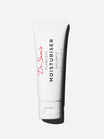
- Moisturise, even when your skin feels oily or breaks out. A lightweight, non-comedogenic moisturiser made for blemish-prone skin props up the barrier and helps you handle your actives.
- Use potent actives with care and go easy on the exfoliation.
- Wear sunscreen daily. It stops post-acne marks from darkening.
- Calm the odd spot as it comes. A targeted solution reduces inflammation in a blemish without damaging the surrounding skin.
And yes, acne-prone skin should use moisturiser. Skipping it tends to backfire: a dry, irritated barrier makes acne treatments harder to stick with.
A simple decision framework
Here’s a quick way forward for best results:
Carry on with a well-structured routine if:
- Your acne is mild
- You're seeing steady improvement with fewer new blemishes
- Your spots are surface-level, not deep or scarring
- Your treatment is comfortable to use
Get professional advice if:
- Acne is hanging on despite consistent treatment
- You have nodules or cysts
- Scars are starting to form
- Hormonal acne won't settle
- Dark marks keep piling up
- Acne is getting in the way of your life
Don't wait to seek medical treatment if:
- Scarring is coming on fast
- Acne is severe or painful
- You have widespread inflammatory lesions
What I tell my patients
"I hate seeing someone stuck on the same routine for years while their acne damages the skin and leaves marks and scars behind. Skincare is powerful in the right hands, used consistently. But knowing when to step up to medical treatment matters. They work together. What I want for my patients is the right treatment at the right time."
The takeaway
The aim isn't to deploy the strongest treatment available. It's to find the right one for your skin, early enough to keep inflammation in check, protect your barrier and spare you lasting marks and scars.
If your acne is mild and slowly getting better, a good routine may be all it needs. Our Acne and Breakouts hub is a good place to build one, and the Routine Finder will point you to sensible support in a couple of minutes. If it's persistent, severe or scarring, book an in-person assessment. Our consultant dermatologists see this daily at Dr Sam Bunting + Associates, and the whole point is to stop guessing and get the right plan.
Frequently asked questions
When should I see a dermatologist for acne?
See a dermatologist if your acne is scarring, deep and painful, hormonal, significantly affecting your quality of life, or not improving after a consistent, well-designed routine of around eight to twelve weeks.
At Dr Sam Bunting + Associates, every consultation starts with understanding your skin, what you've already tried and whether your current routine could be improved or prescription treatment is needed. The aim is to find the right treatment for your skin and build a practical, long-term plan.
To book a consultation, visit our Book an Appointment page.
How long should I try skincare before seeing a dermatologist?
Most topical acne treatments need around eight to twelve weeks of consistent use before you can judge them fairly. If there's no meaningful improvement after that, or if scarring or deep lesions appear at any point, it's reasonable to seek professional advice.
What type of acne needs prescription treatment?
Moderate to severe acne, deep nodular or cystic acne, acne that is scarring or at risk of scarring, and acne that hasn't responded to appropriate over-the-counter treatment often need prescription treatment. A dermatologist will tailor this to your individual circumstances.
When is isotretinoin used for acne?
Isotretinoin is generally reserved for severe acne, acne causing or threatening scarring, or acne that hasn't responded adequately to other appropriate treatments. It requires specialist assessment, monitoring, and a full discussion of risks and precautions.
Can acne skincare prevent scarring?
Indirectly, yes. By reducing active inflammation, effective skincare can lower the chance of new marks and scars forming. Skincare cannot repair existing structural scars once they've developed, which is why controlling acne early matters so much.
Are red acne marks actually scars?
Usually not. Flat red or pink marks are post-inflammatory erythema, and flat brown or grey marks are post-inflammatory pigmentation. Both tend to fade over time. True scars are indentations or raised areas caused by changes in the skin's structure.
Can skincare remove pitted acne scars?
No. Pitted, atrophic scars are a structural change and need in-clinic procedures such as subcision, TCA CROSS, microneedling or laser. Skincare can improve tone and marks, but it can't rebuild lost collagen.
Does hormonal acne need medical treatment?
Not always, but often. Skincare can help, though persistent hormonal acne along the jawline and chin frequently needs medical treatment to address the underlying driver. A dermatologist can advise on suitable options.
Should acne-prone skin use moisturiser?
Yes. A lightweight, non-comedogenic moisturiser supports the skin barrier and helps you tolerate acne actives, which makes it easier to stay consistent with treatment.