








By Dr Mia Steyn, MBChB, MRCP (Derm), Consultant Dermatologist at Dr Sam Bunting + Associates
Dr Mia Steyn is a Consultant Dermatologist at Dr Sam Bunting + Associates. She trained at the University of Stellenbosch and completed her post-graduate specialist dermatology training at the prestigious St John’s Institute of Dermatology in London, where she subsequently held a consultant role managing complex medical dermatology cases. She is on the GMC specialist register. Her clinical focus encompasses the full spectrum of dermatological conditions, from acne and rosacea to pigmentation, eczema, and hair loss, and she brings particular expertise to patients whose skin conditions have proved difficult to diagnose or manage elsewhere.
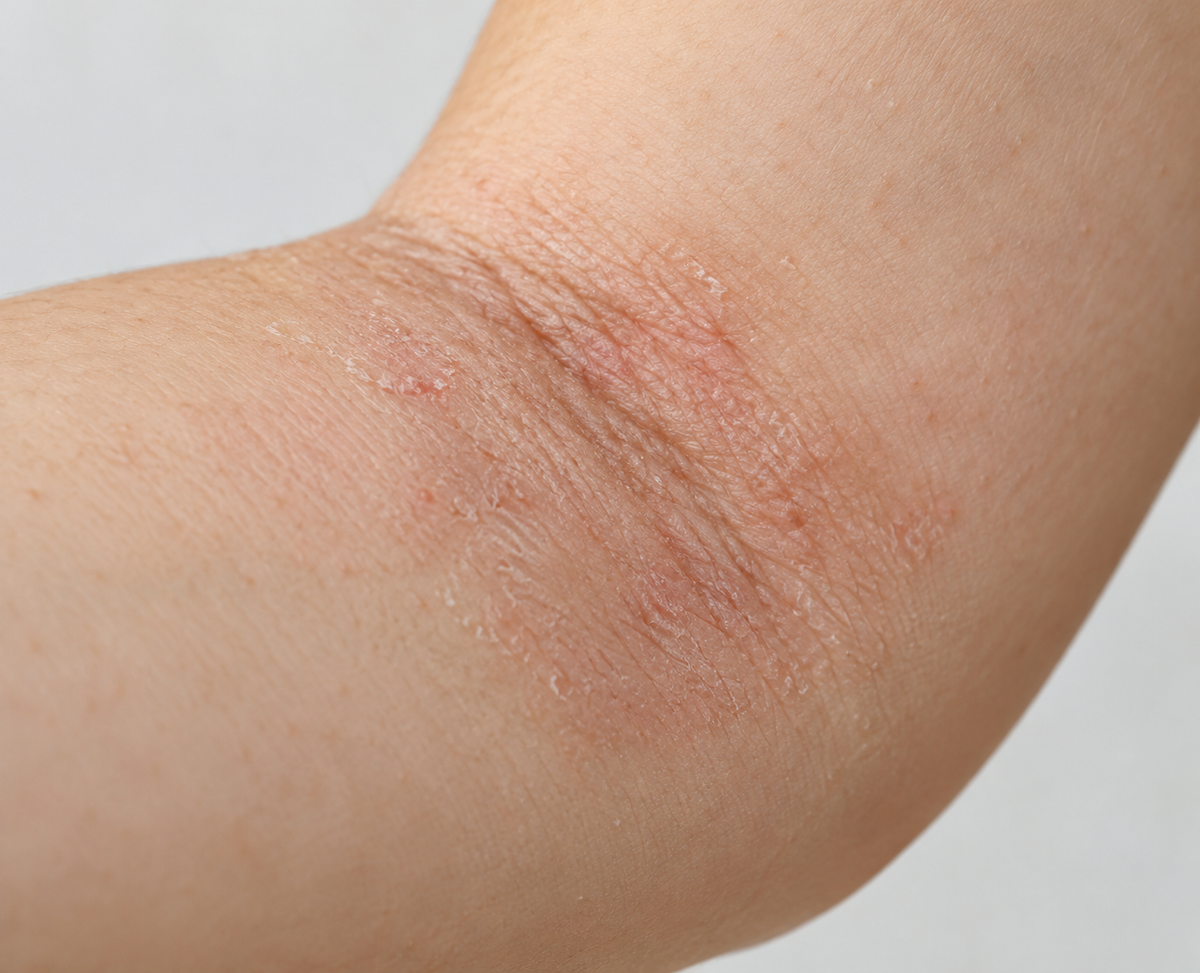
You've got patches of red, scaly, itchy skin, and you're not sure what you're looking at. Maybe you had eczema as a child and assume this is just a flare of the same thing. Maybe someone has already used the word psoriasis and you're not sure whether that's actually right. The two conditions get lumped together constantly, in casual conversation and even in general skincare advice, because on the surface they can look similar.
This is a mix-up I see often in clinic, and it matters more than most people realise. Psoriasis and eczema come from different underlying processes in the body, respond to different treatments, and carry different long-term health considerations. Treating one as though it's the other can leave you using the wrong approach for months. Here's how to tell them apart, and why the distinction is worth getting properly assessed rather than guessed at.
What Is Psoriasis, and How Is It Different From Eczema?
Psoriasis is an autoimmune condition. Your immune system mistakenly treats healthy skin cells as a threat, triggering inflammation and dramatically speeding up how quickly new skin cells are produced. Normal skin cells take around a month to move from the deepest layer of the skin to the surface. In psoriasis, that process can take as little as three to five days, and the skin can't shed the excess cells fast enough, so they build up into the thick, scaly plaques the condition is known for.
Eczema, or atopic dermatitis, works differently. It is also an immune-mediated inflammatory skin condition, but is driven primarily by a weakened skin barrier combined with an overactive allergic-type immune response, rather than the immune system attacking skin cells directly. This is why eczema is so closely linked to asthma and hay fever, and why it tends to respond well to barrier repair alongside anti-inflammatory treatment as initial steps, while psoriasis needs an approach that specifically calms the immune overactivity driving the excess cell turnover.
What Does Psoriasis Actually Look and Feel Like?
Plaque psoriasis is by far the most common form, accounting for around 80 to 90 percent of cases. It typically shows up as raised, well-defined patches of discoloured skin topped with a thick, silvery-white scale, most often on the elbows, knees, scalp, and lower back. The edges of these patches are usually sharp and clearly demarcated, which is one of the more reliable visual differences from eczema, where patches tend to fade out gradually rather than stopping abruptly.
There are other, less common forms worth knowing about. Guttate psoriasis often appears after a streptococcal throat infection and shows up as small, drop-shaped spots, most common in children and young adults. Inverse psoriasis appears in skin folds, such as the armpits or groin, and looks smooth and shiny rather than scaly, because friction and moisture in these areas stop the scale from building up. Pustular and erythrodermic psoriasis are rarer and more severe, and erythrodermic psoriasis in particular, which can cover most of the body, needs urgent medical attention.
Psoriasis often affects more than the skin. Nail changes, including pitting, ridging, thickening, or the nail lifting away from the nail bed, are common and are rarely seen with eczema. Some people with psoriasis also notice joint pain, swelling, or stiffness alongside their skin symptoms, which is simply worth mentioning at your appointment so it can be looked into alongside everything else.
Why Does Getting the Right Diagnosis Matter?
The main reason is a practical one: eczema and psoriasis respond best to different treatment approaches. Using an eczema-style approach on psoriasis, or vice versa, can mean months of frustration with a treatment plan that was never quite suited to what's actually happening in your skin.
Getting the diagnosis right also means your care can be tailored properly from the start, including keeping an eye on anything else that's worth monitoring alongside your skin, which we'll come back to a little later on.
How Do We Diagnose and Treat Psoriasis and Eczema in Clinic?
Diagnosis starts with a thorough look at the skin and a detailed history. I'll ask about when symptoms started, whether there's a family history of psoriasis or eczema, and whether anything specific seemed to trigger the flare, such as a recent throat infection, a period of stress, an injury to the skin, or starting a new medication. Certain drugs, including lithium, beta-blockers, and antimalarials, are recognised triggers for psoriasis, so a full medication review is part of the assessment. For eczema, we also focus on possible allergic drivers, and so I may recommend additional testing using blood, skin prick or patch testing.
Occasionally, if the presentation isn't entirely clear-cut, a small skin biopsy can confirm the diagnosis.
For most people with mild psoriasis, first-line treatment is topical: prescription-strength corticosteroids, vitamin D analogues, or combination preparations, along with medicated treatments for scalp involvement and guidance on the gentlest way to manage scale without damaging the skin further. A brilliant additional treatment option here might be phototherapy, especially if you would prefer not to use steroids, or are sick and tired of using them. We'll review how you're responding within a few weeks of starting a new treatment, since psoriasis often needs some adjustment before we land on the right combination for your skin.
In mild eczema, the first line treatment is similar - we start with barrier repairing emollients, soap substitution, and anti-inflammatory topicals like corticosteroids or non-steroidal alternatives. As for psoriasis, phototherapy can also be an excellent treatment option for selected patients with eczema, especially if you prefer not to use any corticosteroids.
If psoriasis or eczema is more extensive, covering more than around 10 percent of your body, or isn't responding adequately to topical treatment, affects high impact sites (like the face or genitalia) or if you're developing joint symptoms (in the case of psoriasis), that's the point where systemic and biologic treatments become appropriate. These more intensive treatments can be transformative, especially the highly targeted biologic immunomodulatory treatments. Here is where things start to differ considerably, as the two immune pathways involved are totally different, as such, the immunomodulatory treatments are different as well.
A Guide to Psoriasis vs Eczema
| Feature | Psoriasis | Eczema |
|---|---|---|
| Edges of the patch | Sharply defined, clear border | Blurred, poorly defined border |
| Surface | Thick, silvery-white scale | Dry, flaky, sometimes weeping or crusted |
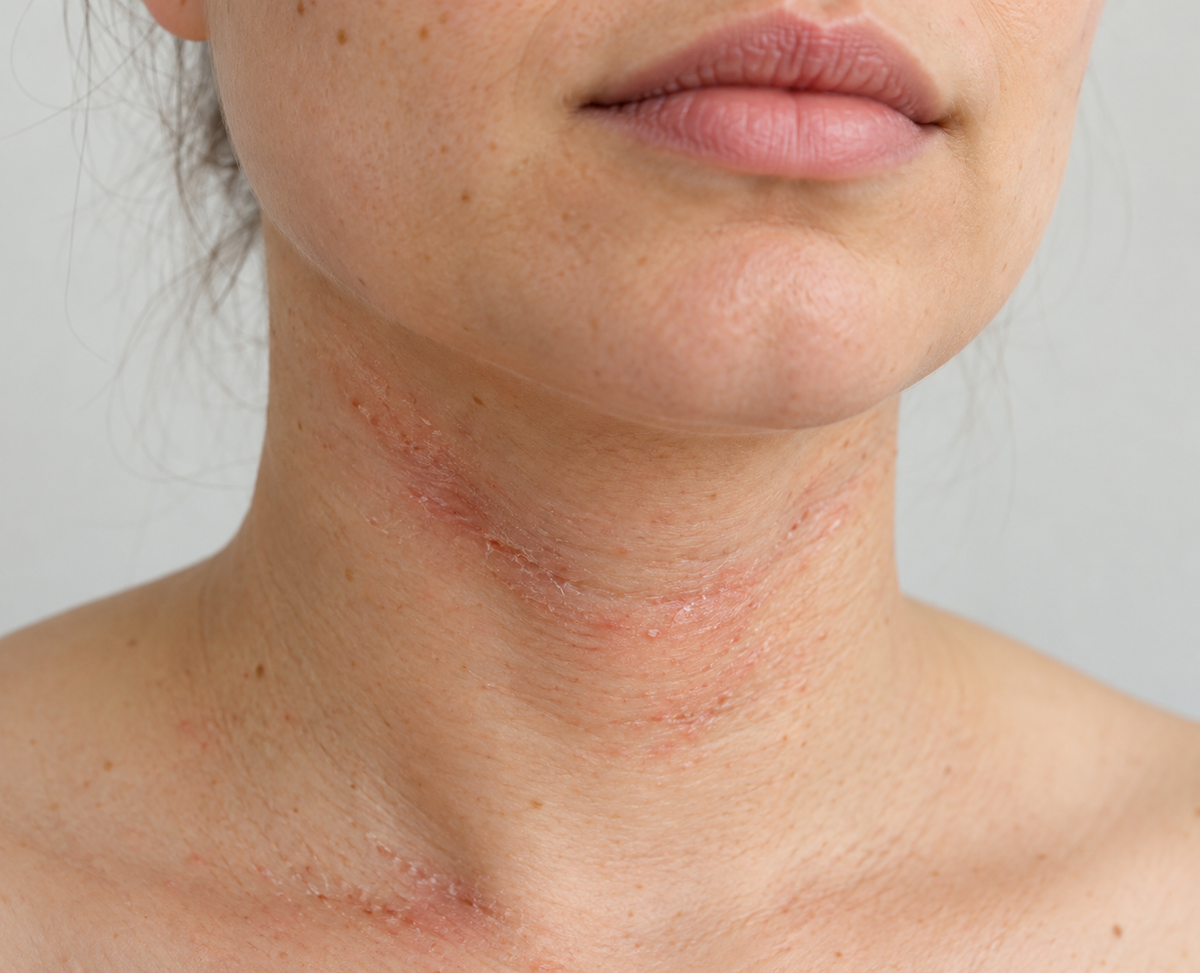
| Common sites | Elbows, knees, scalp, lower back, nails | Insides of elbows and knees, neck, face |
| Itch | Present, but often less intense | Usually intense and a dominant symptom |
| Underlying cause | Autoimmune; overactive immune signalling | Skin barrier dysfunction plus allergic tendency |
| Sometimes linked to | Joint symptoms in some people | Asthma, hay fever, food allergies (the atopic triad) |
| Nail changes | Common: pitting, ridging, lifting | Uncommon |
Is There Anything Else Worth Knowing About Psoriasis?
Most people with psoriasis manage it well long-term once they have the right diagnosis and treatment plan in place. It's worth knowing that psoriasis is an inflammatory condition that can, for some people, relate to broader aspects of health, such as heart health, weight, and blood sugar, alongside the joint symptoms mentioned earlier. This isn't something to worry about, but it is something we like to be aware of, so that if it's ever relevant, we can loop in your GP as part of holistic management of your skin condition. It's one more reason an accurate diagnosis is worth having, rather than something that should add to any worry about the skin symptoms themselves.
Frequently Asked Questions
Can you have both eczema and psoriasis at the same time?
Yes, which is part of why the two conditions get confused so often. It's entirely possible to have a background of eczema, particularly from childhood, and separately develop psoriasis later in life, sometimes even in overlapping areas of skin. When both are present, treatment needs to address each condition specifically rather than assuming a single approach will cover both, which is exactly the kind of situation where a proper dermatological assessment makes the biggest difference.
Is psoriasis contagious or caused by poor hygiene?
No. Psoriasis is an autoimmune condition, driven by your own immune system rather than any external contamination, so it cannot be passed to another person through skin contact, sharing towels, or any other form of everyday contact. It's also not related to hygiene or cleanliness in any way. Genetics play a meaningful role, and having a close family member with psoriasis increases your own likelihood of developing it, but this is about inherited immune signalling, not anything you've done or failed to do.
Does psoriasis increase my risk of other health problems?
For some people, psoriasis can relate to broader aspects of health, including heart health, weight, and blood sugar, alongside joint symptoms in a proportion of patients. This doesn't apply to everyone, and it's not something that should cause alarm. It's simply why, once you have a confirmed diagnosis, we like to keep half an eye on these areas as part of your general care, usually in easy coordination with your GP. Getting an accurate diagnosis means this kind of gentle, ongoing awareness is in place from the start, rather than something that gets missed.
What triggers a psoriasis flare-up?
Triggers vary from person to person, but common ones include emotional stress, throat infections caused by streptococcal bacteria, injury to the skin such as cuts or sunburn, certain medications including lithium and beta-blockers, and changes in weather, particularly cold, dry conditions. Smoking and heavy alcohol use are also recognised triggers. Identifying your own personal triggers, often by keeping a simple diary of flares alongside what preceded them, can meaningfully reduce how often you experience outbreaks, even though it won't eliminate the condition entirely.
When to See a Dermatologist
If you're not certain whether what you're looking at is eczema, psoriasis, or something else entirely, that uncertainty is exactly what a consultation is for. Getting the diagnosis right from the outset means you're not spending months on a treatment plan aimed at the wrong condition, and it means any wider health monitoring psoriasis calls for gets put in place early. To book an assessment with our team at Dr Sam Bunting + Associates, visit our Book an Appointment page, or email us at info@drsambunting.com with any questions first.